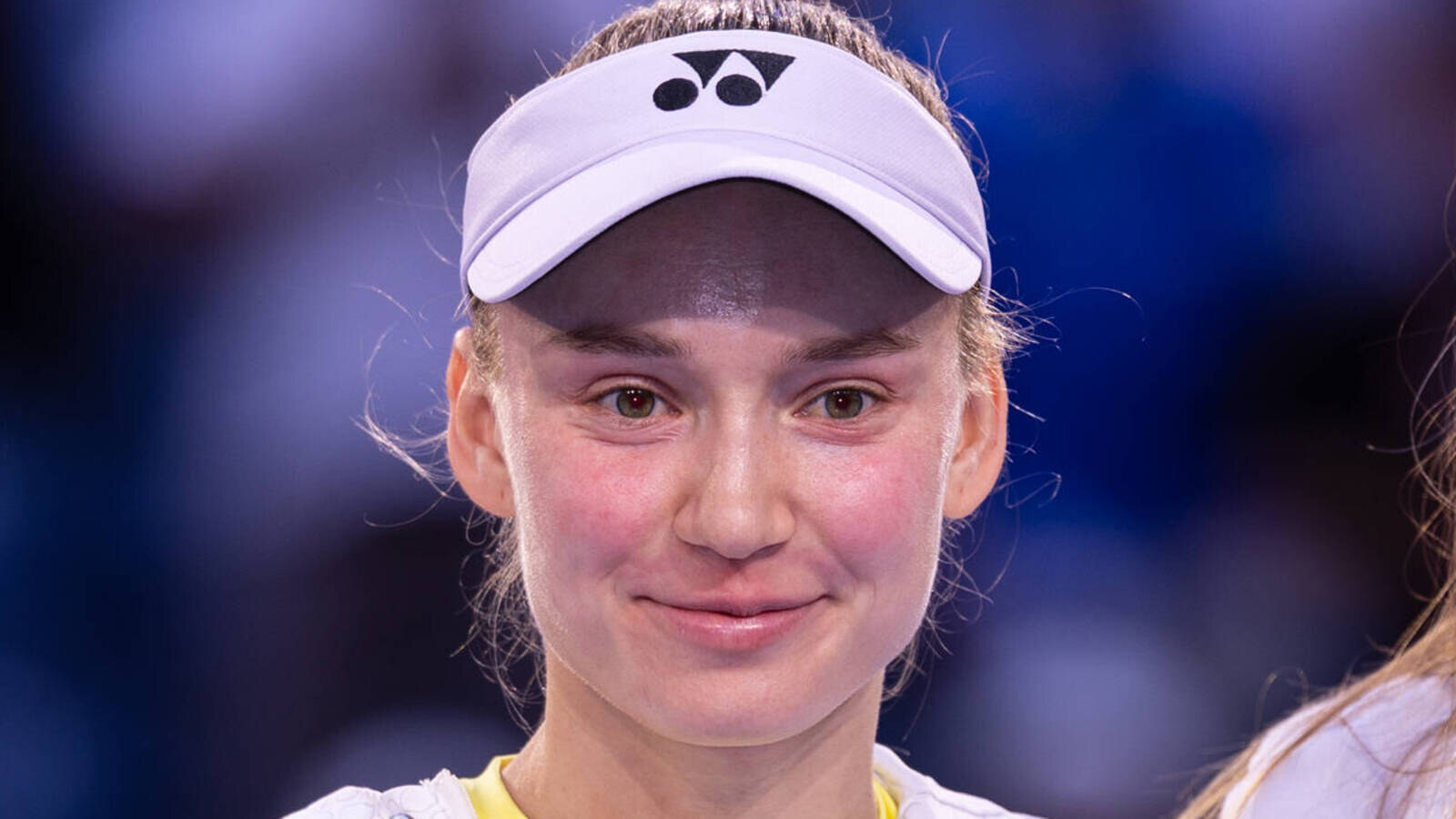
Elena Rybakina’s withdrawal from the WTA Finals has produced two very different readings from the commentary box. Rennae Stubbs sees a self-inflicted problem rooted in a crowded autumn schedule. Kim Clijsters sees an exhausted world No. 1 who deserves sympathy rather than a lecture.
What happened
Rybakina, who won the Australian Open and the US Open this year and arrived in Indian Wells as the reigning champion and the favourite, pulled out on the eve of her opening round-robin match with a viral illness. In her statement she said: “I’ve had an incredible season but my body is just not physically ready to compete.” Marta Kostyuk, the first alternate, took her place.
The withdrawal came after a busy October. Rybakina won the title in Ningbo, then travelled to Tokyo for the Pan Pacific Open, where she secured the year-end No. 1 ranking with a last-16 win before retiring from her quarter-final with a neck injury.
Stubbs: “Why, why, why play Tokyo?”
It is that Tokyo detour that Stubbs cannot get past. Speaking on The Rennae Stubbs Tennis Podcast, the former doubles world No. 1 and one-time coach of Serena Williams questioned the planning behind Rybakina’s autumn. “I question her scheduling. Why, why, why play Tokyo?” she said, as reported by Tennis365.
Stubbs suggested that commercial obligations may have played a part, noting that Rybakina is a Yonex player and that such deals often come with a tournament in Japan attached. But her central point was about priorities. “If you have any inkling of sickness or any body ache, I don’t understand why you play [in] Tokyo,” she said. “You just won Ningbo, get out of there, go to California, get yourself ready to play outside and in hotter conditions. I just don’t understand her scheduling. To me, it’s just wild some of the choices that she has.”
She added, in less diplomatic terms, that Rybakina looked very unwell when she reached Indian Wells before pulling out at the last moment.
Clijsters: “I feel for her”
Clijsters, a three-time winner of the season-ending event, took a gentler line on the Love All podcast with Blair Henley. Henley pointed to a widely shared clip of Rybakina struggling at media day, and Clijsters agreed the player had clearly been ill. “You don’t go to an event when you’re sick; you try to go and feel that you’re healthy and ready to start competing. It’s a very unfortunate situation that she had to withdraw,” she said, speaking to Love All, as reported by Tennishead.
Where Stubbs focused on choices, Clijsters focused on load. “But I’ve seen her over the past few months at times, where she’s kind of looked almost very exhausted, and I feel for her,” she said, pointing to the volume of matches and suggesting sleep and jet lag may have added to the strain.
Two arguments that are not quite opposites
The two positions overlap more than the headlines suggest. Both accept that Rybakina arrived in California in no state to compete. The disagreement is about responsibility. Stubbs treats the illness as the predictable cost of an avoidable trip; Clijsters treats it as the kind of thing that happens to a player carrying the heaviest workload of her career.
There is a fair case on each side. Rybakina had already effectively secured the year-end No. 1 ranking before the Tokyo quarter-final, which strengthens Stubbs’s argument that the week offered little sporting reward against a real physical risk. On the other hand, Clijsters’s point about cumulative fatigue fits a season in which Rybakina won two majors and spent the autumn chasing the top ranking. Fatigue rarely respects a neat schedule.
Rybakina’s history matters too. Earlier in her career she struggled with health problems and developed a reputation for pulling out of events, and her 2026 season had seemed to put that behind her. That is why this exit has drawn so much scrutiny: it revives an old question at the moment she reached the top.
What it means for 2027
Rybakina will finish the year as world No. 1 regardless of what happens in Indian Wells, but the gap behind her could shrink. Aryna Sabalenka and Mirra Andreeva both had the chance to close in with a title run, and Rybakina has 2,000 Australian Open points to defend in January.
That makes the planning question Stubbs raised more than a podcast talking point. If the world No. 1 builds a lighter autumn next year, Stubbs will feel vindicated. If she simply needs rest, as Clijsters implies, the bigger issue is a calendar that leaves even its best player running on empty by November.
For the earlier debate over Rybakina’s chances in Indian Wells, read how Navratilova gave her the edge before Muguruza weighed in, and how the WTA Finals format works.
Subscribe to Punditfeed on Google News for all the latest updates from the world of sports!