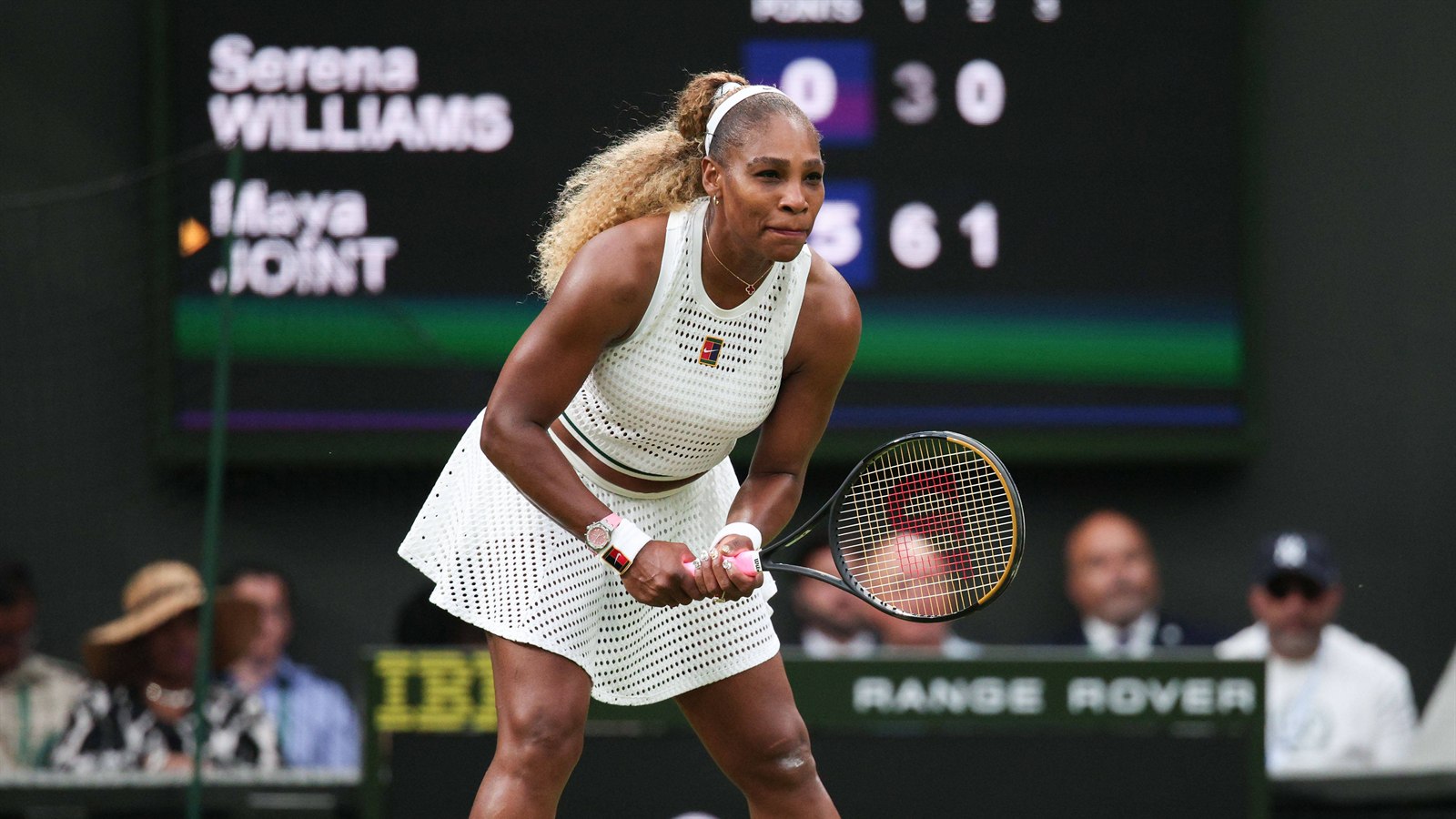
Tennis scoring works in three layers: points make up games, games make up sets, and sets make up a match. A player wins a game by taking four points with a two-point lead, wins a set by taking six games with a two-game lead, and wins the match by taking two sets (best of three) or three sets (best of five). The odd-looking numbers, love, 15, 30 and 40, are simply the names given to the first three points.
This guide explains each layer, how deuce and tie-breaks settle close contests, and how the rules differ at the Grand Slams.
Points: love, 15, 30, 40
Within a game, the server’s score is always called first. The sequence runs as follows.
| Points won | What the umpire calls |
|---|---|
| 0 | Love |
| 1 | 15 |
| 2 | 30 |
| 3 | 40 |
| 4 (with a two-point lead) | Game |
So if the server has won two points and the receiver one, the score is “30-15”. If the receiver leads by the same margin, it is “15-30”. When neither player has won a point, the score is “love-all”, and when both have won one or two points it is “15-all” or “30-all”.
Deuce and advantage
When both players reach 40, the score is called deuce. From deuce, a player must win two points in a row to take the game.
- The player who wins the first point after deuce has the advantage (“advantage server” or “advantage receiver”).
- If the same player wins the next point, they win the game.
- If the opponent wins it instead, the score returns to deuce.
Because there is no limit on how many times a game can return to deuce, a single game can last a very long time. We have collected some famous examples in our feature on the longest deuce rallies.
Games and sets
A set goes to the first player to win six games, provided they lead by two. A set can therefore finish 6-0, 6-1, 6-2, 6-3 or 6-4. If the score reaches 5-5, a player needs to win the next two games to take the set 7-5.
If the score reaches 6-6, a tie-break is played to decide the set, and the set is recorded as 7-6.
Players change ends during a set, and the serve alternates every game.
How a tie-break works
A standard tie-break is played to seven points, again with a two-point margin. Points are counted in plain numbers: zero, 1, 2, 3 and so on, not 15, 30 and 40.
- The player whose turn it is to serve serves the first point.
- After that, players usually serve two points each in turn.
- The first to seven points with a two-point lead wins the tie-break and the set. If it reaches 6-6, play continues until one player is two points clear.
When a set is decided this way, the tie-break score is often shown in brackets, for example 7-6(4), where the number is the loser’s points in the tie-break.
Match tie-breaks
A match tie-break (sometimes called a super tie-break) follows the same pattern but is played to ten points with a two-point margin. It is often used in place of a deciding set in doubles and in shorter formats.
Best of three and best of five
Most professional matches are played over the best of three sets, so the first player to win two sets wins the match. At the Grand Slams, men’s singles matches are played over the best of five sets, so the first to three sets wins. Women play best of three sets at all professional events, including the Grand Slams.
Final sets at the Grand Slams
The four majors once had different rules for the deciding set. On 16 March 2022, the Grand Slam Board announced a common approach for the Australian Open, Roland Garros, Wimbledon and the US Open: when the final set reaches 6-6, a ten-point tie-break is played, won by the first player to reach ten points with a two-point lead.
Before that change:
- the Australian Open already used a ten-point tie-break in the final set;
- Roland Garros had no final-set tie-break, so the decider continued until a player led by two games;
- Wimbledon used a seven-point tie-break at 12-12;
- the US Open used a seven-point tie-break at 6-6.
The Grand Slam Board said the aim was greater consistency across the four events. You can read more about how this affected the All England Club in our explainer on the Wimbledon final set tie-break rule.
Shorter formats
Some events and club competitions use faster formats. The LTA’s FAST4 format, for example, plays sets to four games with a tie-break at 3-3, uses a deciding point at deuce (known as no-ad scoring), and settles a match at one set all with a ten-point match tie-break.
Frequently asked questions
Why is zero called “love” in tennis?
“Love” is simply the traditional word used for zero in a tennis score. Its exact origin is debated, so it is best thought of as part of the sport’s vocabulary.
What does “game, set and match” mean?
It is the umpire’s call when the final point of a match is won: that point wins the game, the game wins the set, and the set wins the match.
What is a break of serve?
A break happens when the receiving player wins a game. Because the server usually has the upper hand, breaks are often the turning points of a set.
Can a set finish 7-5?
Yes. If the score reaches 5-5, a player who wins the next two games takes the set 7-5. Only at 6-6 does a tie-break begin.
Who calls the score first?
The server’s score is always called first, both in games and in the umpire’s announcement of the games score.
Sources: LTA, Grand Slam Board, ITF.
Subscribe to Punditfeed on Google News for all the latest updates from the world of sports!