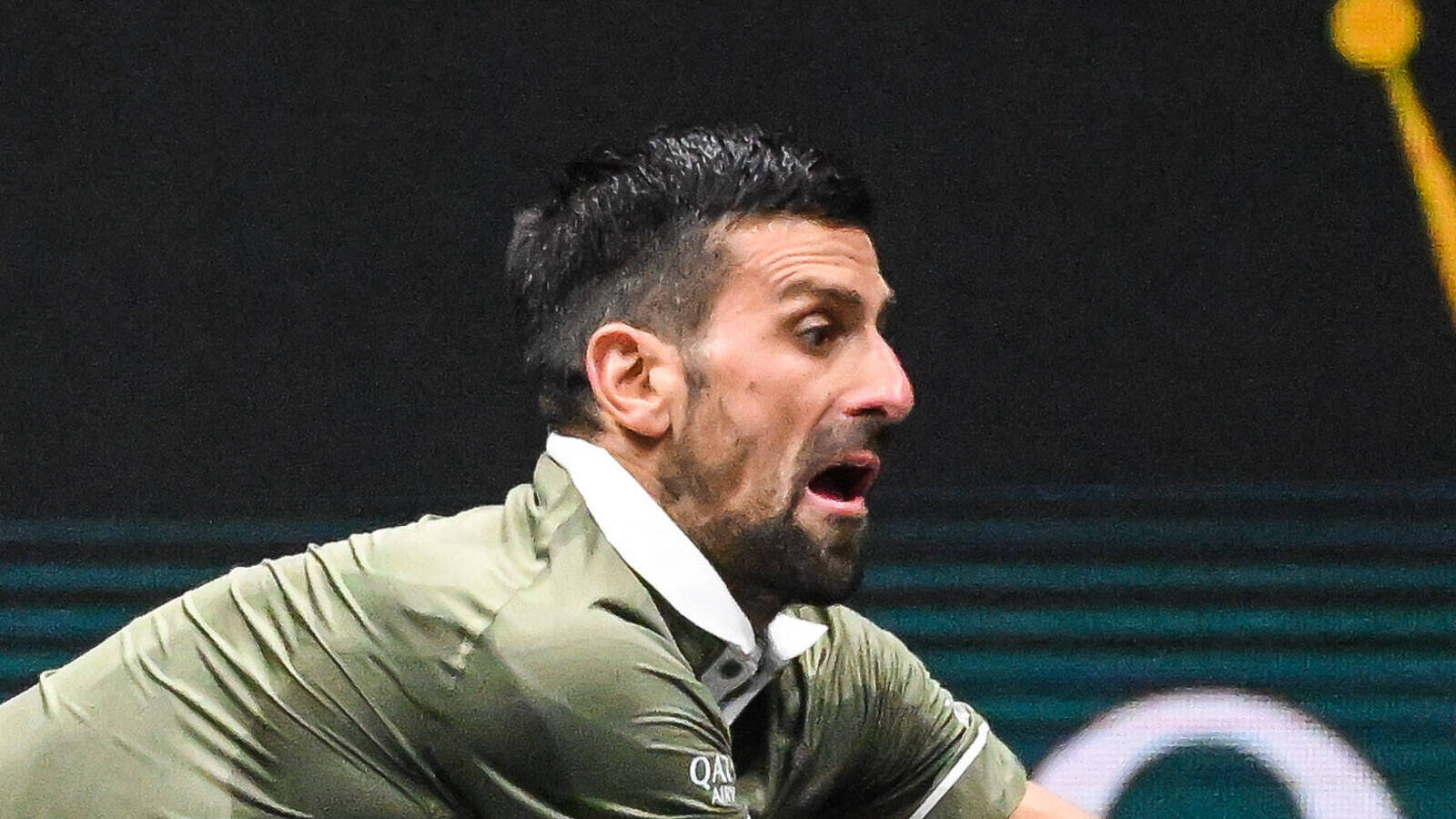
Novak Djokovic’s season ended in Paris on Wednesday with a defeat that left Sky Sports’ Ryan Harrison saying he “didn’t really play poorly at all”, while the BBC’s tennis correspondent says the trend is clear and “only going to get harder”.
Djokovic, 39, lost 2-6 6-3 6-3 to Australian Rinky Hijikata, ranked 83rd, in the second round of the Paris Masters. He needed to reach the semi-finals to stay alive in the race for the ATP Finals in Turin. For only the second time in 20 seasons, he will not be there.
Harrison: credit the opponent
Speaking to Sky Sports, analyst Ryan Harrison put the result down to Hijikata. “Novak didn’t really play poorly at all. This was Hijikata absolutely firing on all cylinders,” he said, as reported by Sky Sports.
Djokovic himself agreed. “He was switched on, I wasn’t serving as well and he was just playing out of his mind, honestly. He was not missing and keeping the ball low and just a terrific performance,” he said, adding that “it was my fault to let the control of the match go”. His plan for the next few weeks is “just rest”, he told reporters, according to the BBC.
That reading has support in the shape of the match. Djokovic started well and won the first set 6-2 before Hijikata lifted his level at the end of the second.
Fuller: the pattern matters more than the match
The BBC’s own account was less generous about the way the match slipped. It said Djokovic appeared laboured and to be struggling physically as the errors mounted in the decider. The BBC’s tennis correspondent, Russell Fuller, went wider, arguing that the Serb’s season “fizzled out” after his title in Beijing and that the decline in results is “only going to get harder” as his 40th birthday arrives in May.
The numbers behind that view are hard to dismiss. Djokovic reached the Australian Open final at 38 and the Wimbledon semi-finals, where Jannik Sinner outplayed him. But he lost in the third round of the French Open and the first round of the US Open, and failed to reach the quarter-finals in eight of his 11 tournaments this year. He has not reached a Masters 1000 quarter-final in 2026. His last Grand Slam title came at the US Open in 2023.
Two ways to read one loss
The two views are not strictly opposed. Harrison is describing one match, in which a lower-ranked opponent played at the top of his range. Fuller is describing a season. A player can lose a match he did not play badly and still be on a downward curve; the two readings sit together comfortably.
Where they split is on what to expect next. If Harrison is right, Djokovic’s level is still high enough to compete for the biggest events and the ranking points will follow when he plays more selectively. If Fuller is right, the margin for off days is vanishing, and a loss like this one becomes more likely every month.
Fuller noted that Djokovic has previously admitted it is really only the Grand Slams that motivate him, yet he played four tournaments after the US Open, which suggests to the BBC that he is ready to tackle 2027 head-on. It is a line we examined before the Paris Masters in our tournament preview, when he was hunting an eighth title in the city.
Missing Turin removes the one event where he could still add a record-extending eighth ATP Finals title this year. The answer to the Harrison-Fuller question will have to wait for next season.
Subscribe to Punditfeed on Google News for all the latest updates from the world of sports!