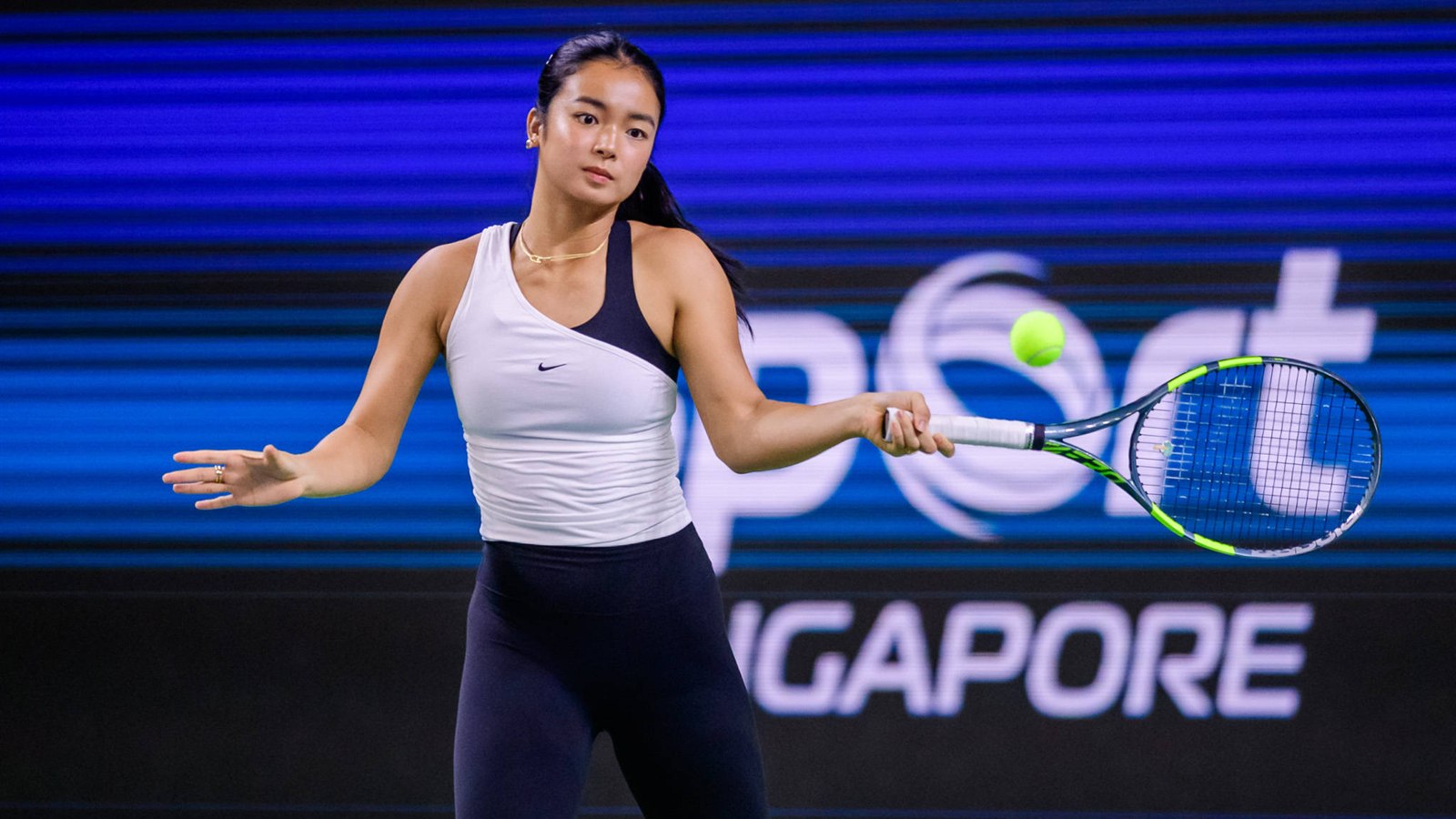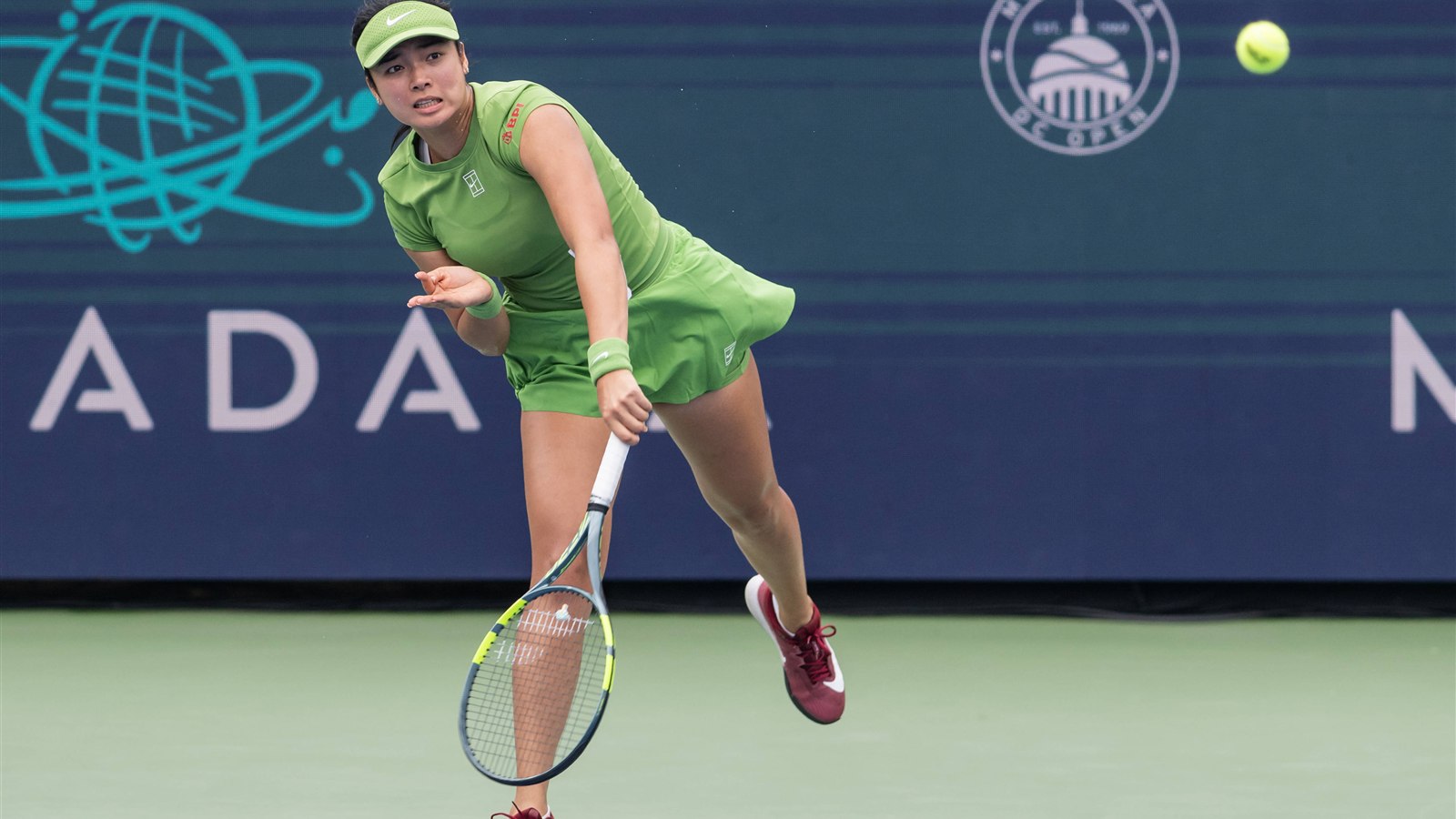
Two well-known voices agree on what is holding Alex Eala back. They disagree completely on whether it can be fixed. Greg Rusedski says the serve is the key that “opens up everything” and has offered to work on it himself. Rennae Stubbs says it is a ceiling: “Eala’s serve will never win her a Grand Slam.” Both comments were gathered by Tennis365 early on Wednesday, two days after the 21-year-old’s first-round exit in Wuhan. Rusedski has the better case, and Stubbs’s own example is the reason why.
What Rusedski said
Rusedski made his offer on his podcast, Off Court with Greg. “I’d love to have a crack at it,” he said. “I don’t know if I’d ever be invited to do so. But during the offseason, that would be something I would be very interested in doing because if she gets the serve, it just opens up everything.” On Sky Sports Tennis commentary in Shanghai, he added the conditions: “It has to be the right player. If I can make the difference and it depends on the players’ attitude and effort.”
He is not a neutral observer of serves. He was a big server in his playing days, and Tennis365 notes that he has coached Kyle Edmund, Victoria Azarenka and Giovanni Mpetshi Perricard. There is no sign that Eala is looking beyond her current coach, Joan Bosch, so this is an offer rather than a plan.
What Stubbs said
Stubbs, a Grand Slam champion turned coach and broadcaster, put it more bluntly on her podcast: “Eala’s serve will never win her a Grand Slam. I know people could say the same about Angie Kerber, but I feel that’s what’s holding Eala back.”
That second sentence is where the argument turns. Stubbs raises the obvious counterexample herself and then waves it away without saying why it does not apply.
The Kerber problem
Angelique Kerber was never a big server, and she won three Grand Slam singles titles: the 2016 Australian Open, the 2016 US Open and Wimbledon in 2018. She did it as a left-hander who defended superbly, returned well and turned defence into attack. Eala is also a left-hander whose game is built from the baseline. If Kerber could win majors with a modest serve, “never” is the wrong word for Eala.
That does not make the serve irrelevant. Kerber’s titles came at 28 and 30, and they came because the rest of her game was good enough to cover the gap. The question for Eala is not whether a weak serve can win a Slam. History says it can. The question is whether her other weapons are good enough yet to carry it.
What Wuhan showed
The Wuhan defeat is a useful test case. Eala led Shi Han, then ranked No. 217, by 6-4, 3-2 and lost seven games in a row, going out 4-6 6-3 6-3, as Tennis365 reported. As we noted in our piece on Naomi Broady’s verdict, Shi closed the match with back-to-back aces. In a match that turned on a run of games, the player with the free points on serve finished stronger.
That is Rusedski’s argument in miniature. A serve that wins a few cheap points does not need to be a weapon. It needs to stop the bleeding when the opponent is on a run. Eala is ranked No. 19 with 2,241 points and reached a career high of No. 18 in August, after becoming the first Filipina to win a WTA title, in Washington. She is already winning at a high level without a big serve. The upside from even a modest improvement is large.
Our verdict
Rusedski has the better case. Stubbs has diagnosed the weakness correctly, but “never” is an overstatement, and her own Kerber example undermines it. The serve does not have to become a strength for Eala to win at the very top. It has to stop being the thing opponents target when the match gets tight. That is a coachable problem, and the off-season after Hong Kong is the time to start. Whether Rusedski gets the call is another matter. The diagnosis he offered for free is the useful part.
Sources: Tennis365.
Subscribe to Punditfeed on Google News for all the latest updates from the world of sports!